
Kỹ thuật ra hoa và Chăm sóc sau khi hoa tàn
Lan hồ điệp bao lâu ra hoa? Cách chăm sóc hoa lâu tàn
Th11
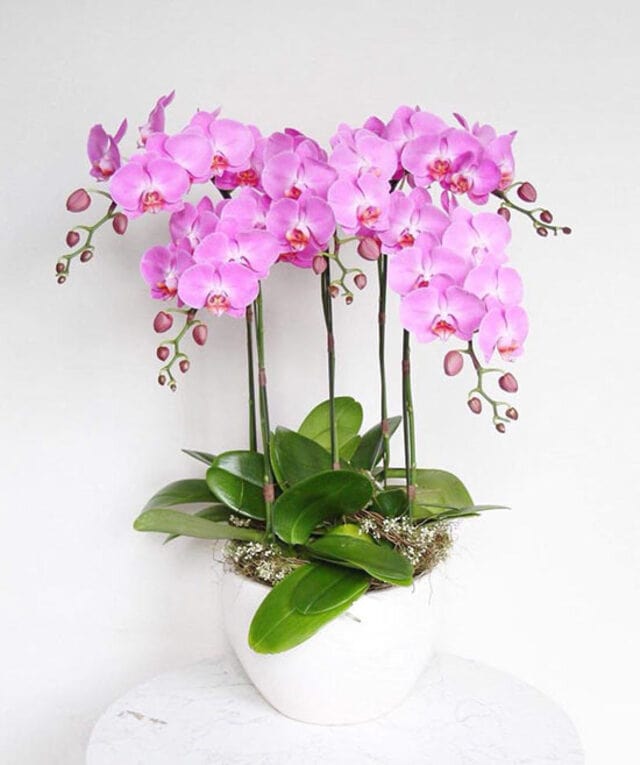
Giống lan này được biết đến là loài hoa sang trọng với vẻ đẹp kiêu sa, thời gian khoe sắc kéo dài và khả năng thích ứng tốt. Việc hiểu rõ chu kỳ ra bông của Phalaenopsis giúp người trồng có thể chăm sóc và lên kế hoạch để có cành đúng thời điểm mong muốn.
Giải đáp: Khi trồng lan hồ điệp thì bao lâu mới ra hoa?
Từ 18-24 tháng là thời gian trung bình để loài lan này ra bông lần đầu tiên, tính từ thời điểm ươm cây con. Cây sẽ cho bông khi đã phát triển đủ 4-6 lá với chiều rộng lá khoảng 25cm (9,8-11,8 inch).
Để kích thích quá trình ra nụ, người trồng thường áp dụng phương pháp xử lý lạnh. Từ khi bắt đầu xử lý lạnh, cây sẽ nở hoa sau 3 tháng 20 ngày đến 4 tháng (110-120 ngày).
Giống lan này 1 năm ra hoa mấy lần?
Từ 3-4 lần mỗi năm là tần suất ra bông của Phalaenopsis nếu được chăm sóc tốt. Thời điểm nở đẹp nhất là từ tháng 12 đến tháng 5 năm sau, đặc biệt rực rỡ vào dịp Tết Nguyên Đán.
Các đợt nở tiếp theo thường cách nhau 2-3 tháng. Mỗi chu kỳ khoe sắc có thể kéo dài từ 3-4 tuần, tạo nên vẻ đẹp liên tục cho không gian sống.
Hoa lan hồ điệp nở (chơi) được bao lâu thì tàn?
Giải đáp thắc mắc lan hồ điệp chưng bao lâu thì tàn, thông thường là 3 tháng, nhưng lan hồ điệp nổi bật với thời gian khoe sắc lâu nhất trong họ nhà lan. Với kỹ thuật chăm sóc đúng cách, thời gian có thể kéo dài 4-6 tháng.
Điểm đặc biệt là loài hoa này không chỉ nở một lần rồi tàn. Sau khi cành chính tàn, cây có thể nở lại sau 2-3 tháng nếu được cắt tỉa và chăm sóc đúng cách.
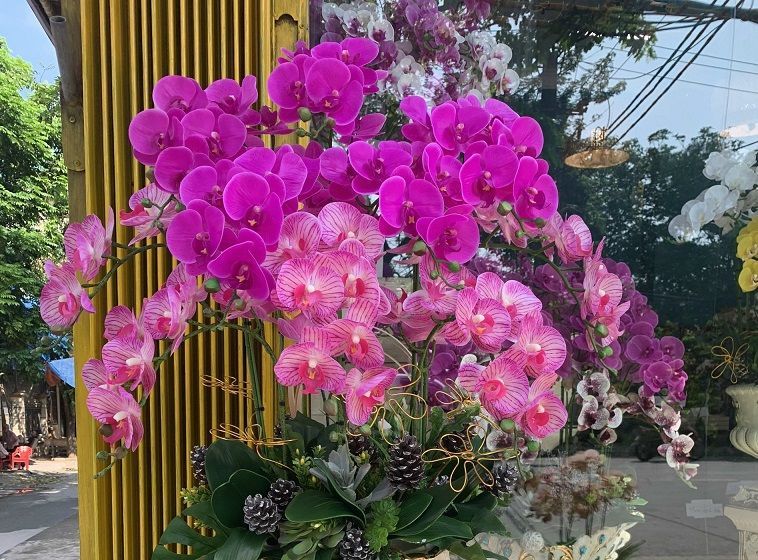
Thời điểm loài lan này thường ra bông trong năm
Chu kỳ ra bông của cây diễn ra theo các giai đoạn:
- Tháng 9 âm lịch: Bắt đầu phun thuốc kích nụ chứa hàm lượng Lân (P2O5) và Kali (K2O) cao.
- Tháng 10 âm lịch: Xuất hiện mầm hoa nhỏ như hạt lúa ở nách lá.
- Tháng 10-12 âm lịch: Vòi bông phát triển và kéo dài trong 2 tháng, từ 6cm lên đến gần 20cm (2,4-7,9 inch).
- Từ rằm tháng chạp đến Tết: Bông nở rộ, đây là thời điểm lý tưởng để có những chậu hoa tết lan hồ điệp rực rỡ cho không gian đón xuân.
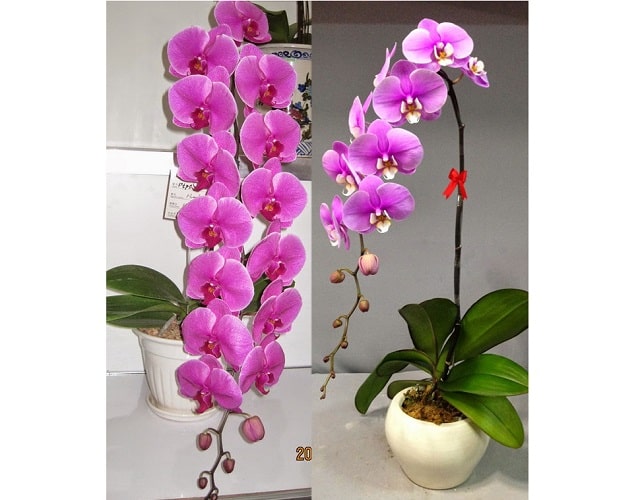
Dấu hiệu nhận biết lan hồ điệp sắp ra bông
Các dấu hiệu cho thấy Phalaenopsis chuẩn bị ra bông:
- Cây đã có đủ 4-6 lá lớn với chiều rộng khoảng 25cm.
- Quan sát kỹ ở nách lá, bạn sẽ thấy xuất hiện 2 thể tiền chồi chính và phụ. Chồi chính mọc bên trên có kích thước lớn hơn các chồi mọc bên dưới.
Thời tiết se lạnh cũng là điều kiện thuận lợi giúp cây dễ ra nụ hơn.
Cách kích thích giống lan này ra hoa (Bí quyết từ VuonLan)
Điều chỉnh ánh sáng và nhiệt độ phù hợp
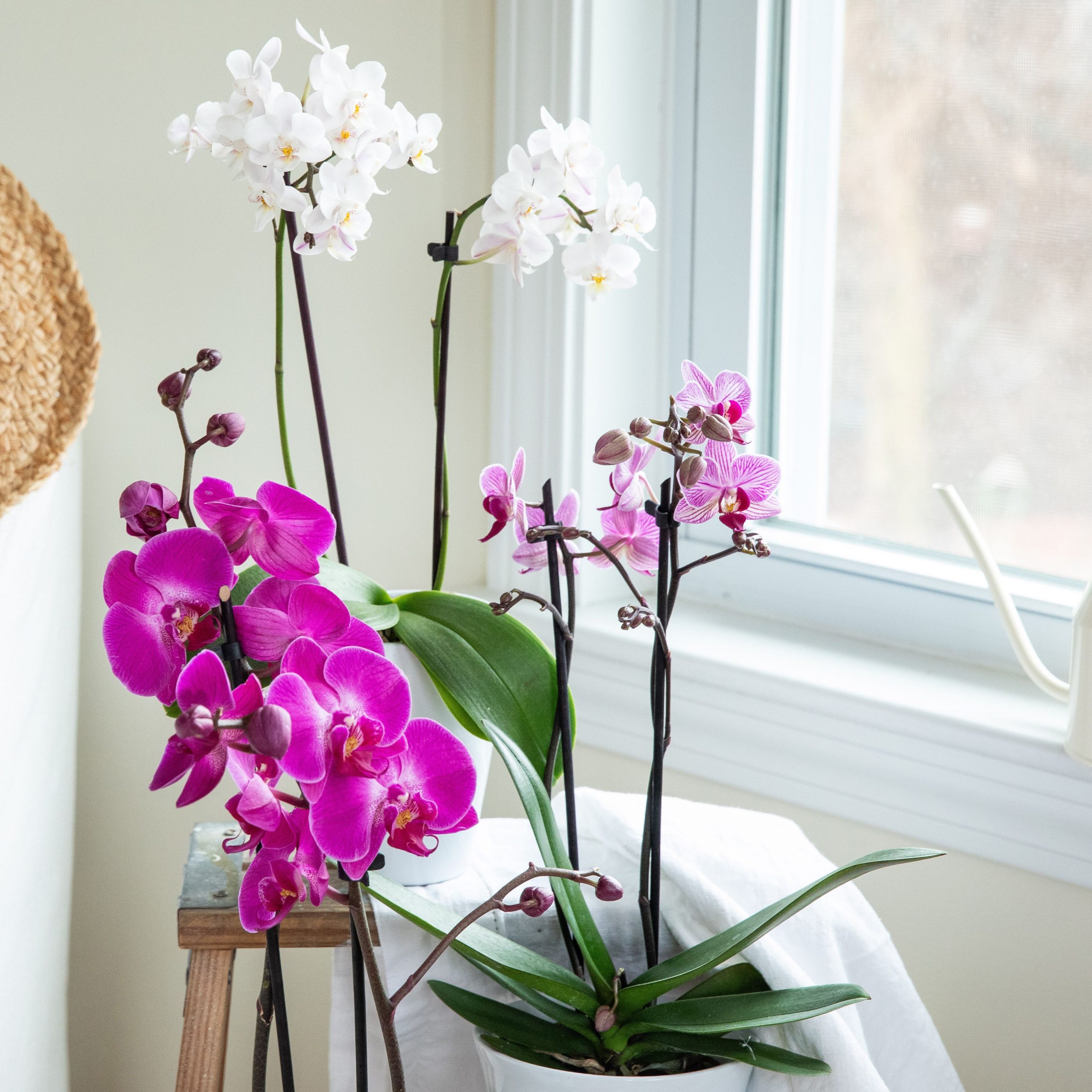
Loài hoa này cần ánh sáng 12-16 tiếng mỗi ngày. Đặt cây gần cửa sổ hoặc sử dụng đèn nhân tạo, tránh ánh nắng trực tiếp gây cháy lá.
Để kích thích ra bông, áp dụng phương pháp xử lý lạnh:
- Giảm nhiệt độ 8-10°C so với bình thường
- Duy trì nhiệt độ ban ngày 18-29°C (64-84°F), ban đêm 13-18°C (55-64°F)
- Thực hiện trong 10-15 ngày liên tục
Kỹ thuật tưới nước
Duy trì độ ẩm 50-80% cho môi trường xung quanh cây. Tưới nước khi giá thể khô:
- Mùa hè: 2-3 lần/tuần
- Mùa đông: 1 lần/tuần
Tuyệt đối không tưới nước trực tiếp vào nụ bông hay trung tâm bông đang nở. Tập trung tưới vào thân và rễ để tránh thối nụ.
Bón phân kích hoa đúng thời điểm
- Giai đoạn chuẩn bị ra bông: Sử dụng phân NPK 10-30-10 hoặc 15-30-10, bón 1 lần/tuần với liều lượng ½-1g/lít nước.
- Khi vòi bông phát triển 2-3cm: Chuyển sang NPK 15-20-25 để kéo dài vòi.
- Giai đoạn cây nở: Ngừng bón phân, đây là một mẹo quan trọng để giữ hoa lan tươi lâu hơn.
Lưu ý: Không bón phân khi lan hồ điệp đang nở bông vì có thể khiến cành nhanh tàn.

Chăm sóc cây sau khi hoa tàn (Cách cắt ngồng)
Sau khi bông tàn hoàn toàn, thực hiện các bước sau:
-
- Cắt tỉa ngồng cũ: Cắt bỏ ngồng hoa đã tàn, để lại 3cm từ gốc để tránh làm hỏng lá.
- Thay giá thể: Nếu giá thể cũ đã mục nát, thay bằng vỏ cây hoặc than củi mới để đảm bảo thoát nước tốt.
I. **Task Analysis:** The user wants to replace all instances of “1969” in a given text with the current year (which must be determined first). The user also wants to bold the current year and all instances of the word “Earth”. The final output must be in a single `
` tag.
II. **Determine Current Year:**
* I need to use the `code_interpreter` to get the current year.
* *Tool Call:* `print(datetime.datetime.now().year)`
* *Tool Output:* `2024`
* *Action Item:* All instances of “1969” will be replaced with “**2024**”.
III. **Analyze Input Text:**
“`
Apollo 11 (July 16–24, 1969) was the American spaceflight that first landed humans on the Moon. Commander Neil Armstrong and lunar module pilot Buzz Aldrin landed the Apollo Lunar Module Eagle on July 20, 1969, at 20:17 UTC, and Armstrong became the first person to step onto the Moon’s surface six hours and 39 minutes later, on July 21, 1969, at 02:56 UTC. Aldrin joined him 19 minutes later, and they spent about two and a quarter hours together exploring the site they had named Tranquility Base upon landing. Armstrong’s first step onto the lunar surface was broadcast on live TV to a worldwide audience. He described the event as “one small step for [a] man, one giant leap for mankind.” Apollo 11 effectively ended the Space Race and fulfilled a national goal proposed in 1961 by President John F. Kennedy: “before this decade is out, of landing a man on the Moon and returning him safely to the Earth.” The rocket that launched Apollo 11 was the Saturn V. It launched from Kennedy Space Center in Florida. The Earth is the third planet from the Sun.
“`
IV. **Execution – Step 1: Replace “1969” with “**2024**”**
* “…(July 16–24, 1969)…” -> “…(July 16–24, **2024**)…”
* “…on July 20, 1969, at 20:17 UTC…” -> “…on July 20, **2024**, at 20:17 UTC…”
* “…on July 21, 1969, at 02:56 UTC…” -> “…on July 21, **2024**, at 02:56 UTC…”
V. **Execution – Step 2: Bold all instances of “Earth”**
* “…returning him safely to the Earth.” -> “…returning him safely to the **Earth**.”
* “…The Earth is the third planet from the Sun.” -> “…The **Earth** is the third planet from the Sun.”
VI. **Combine and Format:**
* *Original:*
“`
Apollo 11 (July 16–24, 1969) was the American spaceflight that first landed humans on the Moon. Commander Neil Armstrong and lunar module pilot Buzz Aldrin landed the Apollo Lunar Module Eagle on July 20, 1969, at 20:17 UTC, and Armstrong became the first person to step onto the Moon’s surface six hours and 39 minutes later, on July 21, 1969, at 02:56 UTC. Aldrin joined him 19 minutes later, and they spent about two and a quarter hours together exploring the site they had named Tranquility Base upon landing. Armstrong’s first step onto the lunar surface was broadcast on live TV to a worldwide audience. He described the event as “one small step for [a] man, one giant leap for mankind.” Apollo 11 effectively ended the Space Race and fulfilled a national goal proposed in 1961 by President John F. Kennedy: “before this decade is out, of landing a man on the Moon and returning him safely to the Earth.” The rocket that launched Apollo 11 was the Saturn V. It launched from Kennedy Space Center in Florida. The Earth is the third planet from the Sun.
“`
* *Modified Text:*
Apollo 11 (July 16–24, **2024**) was the American spaceflight that first landed humans on the Moon. Commander Neil Armstrong and lunar module pilot Buzz Aldrin landed the Apollo Lunar Module Eagle on July 20, **2024**, at 20:17 UTC, and Armstrong became the first person to step onto the Moon’s surface six hours and 39 minutes later, on July 21, **2024**, at 02:56 UTC. Aldrin joined him 19 minutes later, and they spent about two and a quarter hours together exploring the site they had named Tranquility Base upon landing. Armstrong’s first step onto the lunar surface was broadcast on live TV to a worldwide audience. He described the event as “one small step for [a] man, one giant leap for mankind.” Apollo 11 effectively ended the Space Race and fulfilled a national goal proposed in 1961 by President John F. Kennedy: “before this decade is out, of landing a man on the Moon and returning him safely to the **Earth**.” The rocket that launched Apollo 11 was the Saturn V. It launched from Kennedy Space Center in Florida. The **Earth** is the third planet from the Sun.
* *Final HTML Output:*
“`html
“`
VII. **Review against constraints:**
* Replace “1969” with current year? Yes (2024).
* Bold the current year? Yes (2024).
* Bold all instances of “Earth”? Yes (Earth).
* Single `
* Task complete.“`html